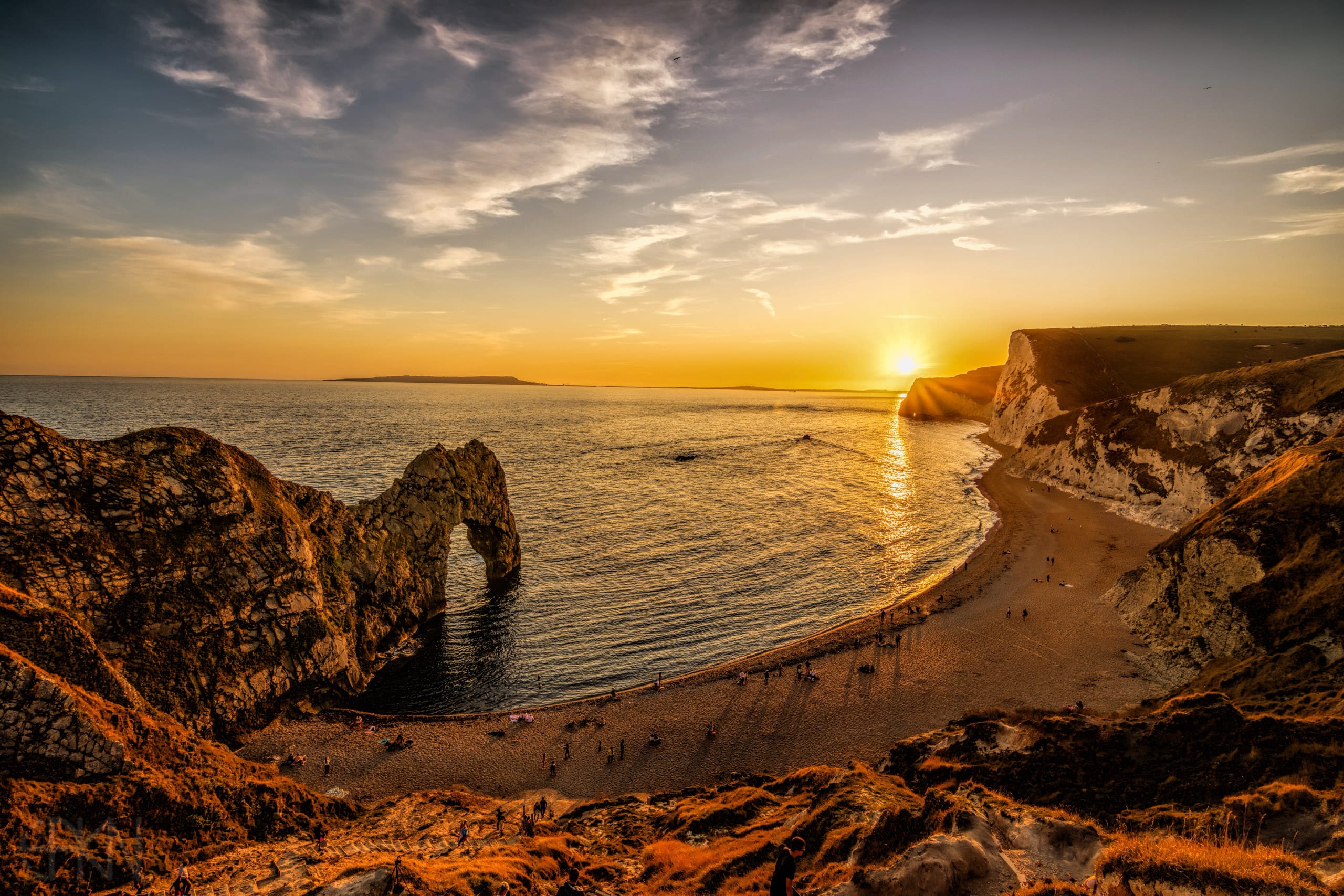
I know. There are so many photos of Durdle Door, it makes your head spin. But I just had to.
This natural limestone arch lies in a headland beside a sandy beach on the so-called ‘Jurassic Coast‘ near Lulworth in south Dorset. The ‘door’ itself is the conspicuous natural arch in the limestone cliff, formed by erosion.
It’s important for visitors to note that the cliff faces in this area are constantly subject to falling rocks and even collapse, and great care should be taken to keep well away from the cliff edges and from areas at the foot of the rocks. A massive cliff fall occurred near Durdle Door in 2013.
The name ‘Durdle’ as applied to the aperture in the rock is very old, possibly dating back to more than 1,000 years. The name is derived from the Old English “thirl” meaning to pierce, bore or drill (related to “nostril”), in turn derived from “thyrel”, meaning ‘hole’. The same etymological root applies to similar sounding names for apertured rocks such as the Thurlestone Rock in Devon.
Although owned by the Lulworth Estate, the area is open to the public, and is a very popular resort—so popular, that it’s well-nigh impossible to capture a photograph without people in the frame. Even in Winter this proves difficult. One bonus of this at sunset however is the pleasing way that the long shadows of the people on the beach are thrown, radiating from the point of the setting sun.
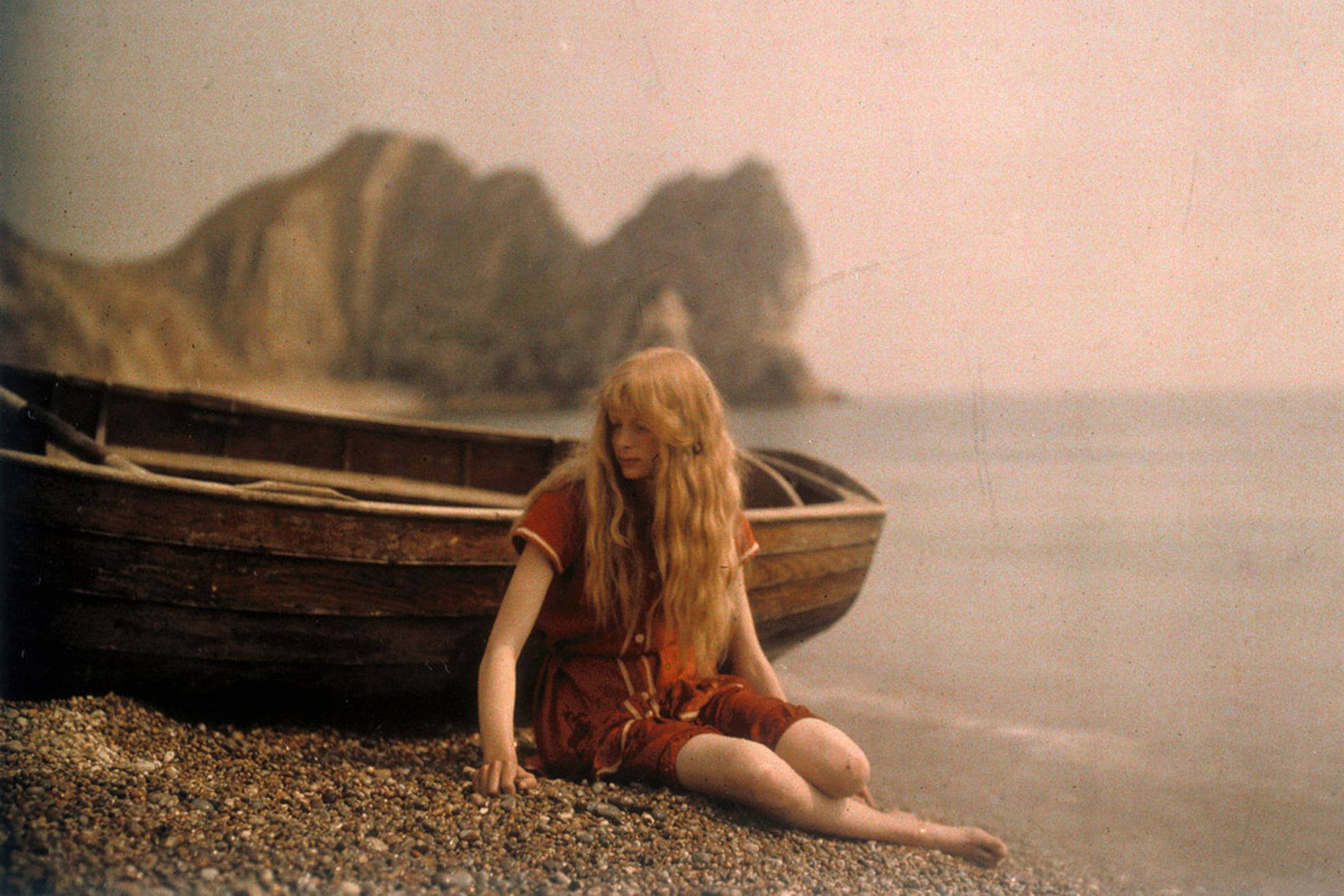
The beach at Durdle Door was the setting for one of the most famous autochrome photographs (an early colour process) taken by Mervyn O’Gorman in August 1913 of Christina Bevan, a daughter of one of O’Gorman’s acquaintance. It seems incredible that such beautiful colour photography could have been taken so long ago. Christina’s glorious hair, her striking red bathing dress, the boat and the perfectly managed shallow depth of field of the beach all evoke an air of timeless beauty and peace.
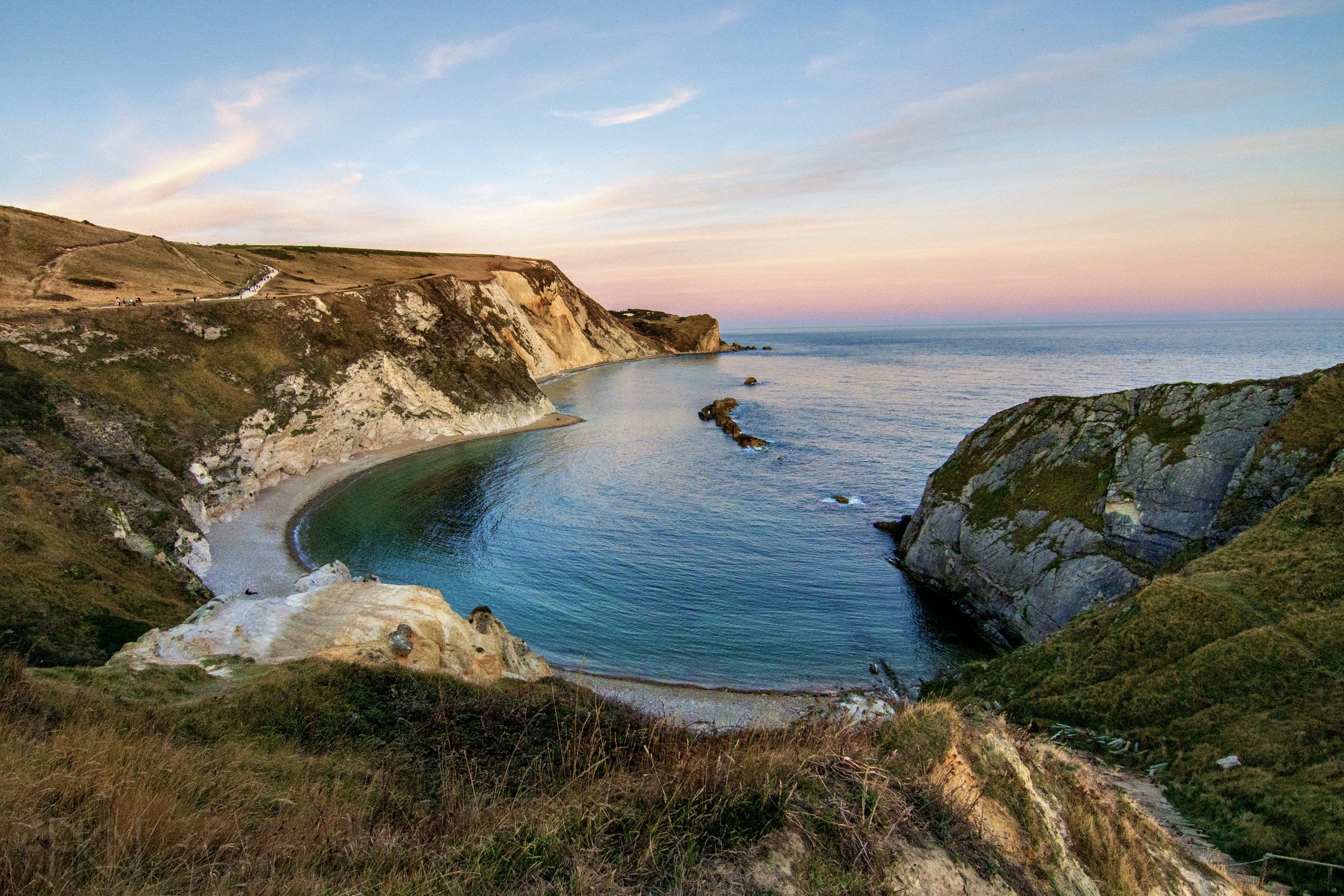
To the east of Durdle Door is Man O’ War Bay, sometimes known as “Man o’ War Cove”. This is the ‘other’ bay and beach that you can’t help noticing to the East if you stand on the high rocky area or headland above Durdle Door. It’s a pretty bay, and the beach is comprised of sand and fine pebbles. The path down to the beach is quite steep, and is therefore not particularly suitable for those with disabilities.
I’m not sure how the bay received its name. It would be hard to imagine a ship the size of a Man O’War, or indeed any other large sea-going vessel, putting into harbour there, as the plainly exposed rocks would surely prohibit one from entering. It may be that the exposed rocks themselves have come to be known collectively as ‘the Man O’War’—perhaps at one time people thought their shape reminiscent of a big sailing ship.